
Drywall repair in Logan and Cache Valley
Holes, cracks, nail pops, water damage and the patch somebody else already tried. Cut back properly, mudded in coats, texture matched, dust cleaned up. By the owner.
Every kind of drywall damage
People usually call about one specific thing, so here is the whole list. I cover Logan and the whole valley, Wellsville up through to Preston.
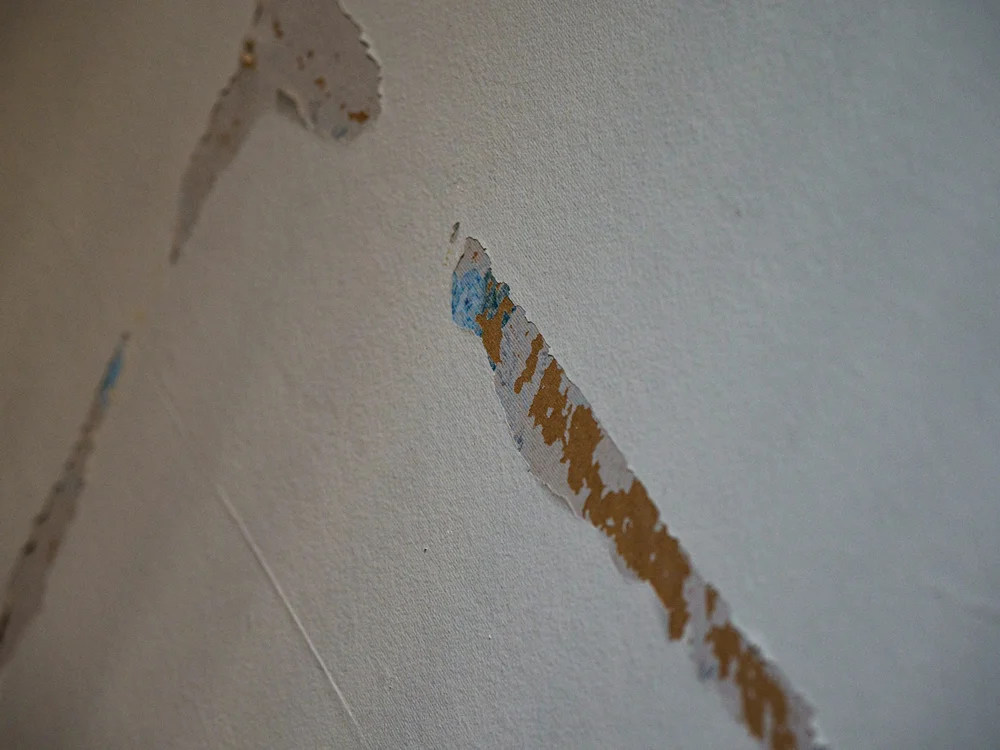
Torn paper like this is a good example of why method matters. Skim compound straight over exposed paper and it swells, bubbles and comes back within the year. It has to be sealed first.
Holes in the wall
Doorknob dents, a foot through the hallway, furniture moved badly. Cut back to clean board, backed and patched, not just filled.
Holes in the ceiling
Harder to hide than a wall because ceilings catch the light from every angle. Worth doing properly the first time.
Anchor and nail holes
The most common call I get. Usually a TV coming down, shelves removed, or a move-out. If there are a lot, I do the whole wall at once.
Nail pops and seam cracks
Little round bumps that appear in rows, or a hairline crack running off a door frame. Extremely common in newer valley homes. More on why below.
Torn drywall paper
What you get when tape or a poster comes off and takes the surface with it. Needs sealing before it is mudded or it will bubble.
Water damage
Stained, soft or sagging board. First job is working out whether it is still wet and where it came from. No point patching a ceiling while the source is live.
Corner bead damage
Dented or cracked outside corners, usually from moving furniture. The metal underneath has to be dealt with, not just skimmed over.
A patch that did not work
Somebody filled it, it cracked or it shows through the paint. Often faster to cut it out and start again than to keep building on it.
Three situations, most weeks
Drywall damage tends to arrive with a deadline attached, usually a move, a deposit or a listing photo.
Anchor holes and move-out patching
The single most common drywall call I get in Logan, and it spikes every August when the rentals around USU turn over. Landlords and tenants both call me for the same reason: a wall full of anchor holes and a deposit on the line.
- Whole-wall patching rather than spot by spot
- Turnaround that fits a move-out date
- Primed ready for paint
The two-year settling list
Nibley, North Logan, Providence, Hyde Park and Smithfield are full of houses young enough to still be moving. Nail pops along a stud and hairline cracks off the door frames are the usual pair.
- Nail pops set properly, not just skimmed
- Cracks cut out and taped, not filled
- Honest advice on waiting out the settling
Central Logan and the old streets
The Island, Center Street and the older parts of Wellsville and Richmond. Older board, older patches, and a fair amount of plaster and lath that behaves nothing like modern drywall.
- Plaster and lath handled differently
- Old failed patches cut back and redone
- Texture matched to what is actually there
What does drywall repair cost?
Three things decide it, and none of them is square footage. Same pricing across Logan and the valley, with no travel charge for the outlying towns.
How many, how big, what texture
- Number of spots. Six anchor holes on one wall is a different job from six spread across the house.
- Size of the damage. Anything bigger than a fist needs backing and a fitted patch, not just compound.
- Texture. Matching knockdown or orange peel takes time and a second visit. Smooth is harder still.
Ceilings run higher than walls for the same size hole. They are more awkward to work and far less forgiving to the eye.
Flat number, before I start
- Free estimate, and no charge to come look
- One number for the whole job, not per hole
- If it needs two visits for drying time, that is in the quote, not added after
- No pressure if the number is not for you
A photo of the damage is usually enough for me to give you a close number without coming out.
Why Cache Valley walls crack
Two very different causes, and which one you have depends on how old your house is.
Newer homes: settling
Nibley, North Logan, Providence, Hyde Park, Smithfield.
- A new house settles for its first couple of years, and drywall is the thing that shows it
- Nail pops appear in rows along a stud, small round bumps pushing through the paint
- Hairline cracks run diagonally off the top corners of door and window frames, because that is the weak point
- None of it is structural. It is normal, it is annoying, and it is fixable
- Worth waiting until the settling slows before repairing, or you will be doing it twice
Older homes: dry air and age
Central Logan, the Island, Center Street, Wellsville.
- We are in high desert at 4,500 feet with low humidity all year
- Winter inversions pool cold air on the valley floor for days, so the furnace runs hard from October through April and dries the indoor air out further
- Framing moves with that cycle, and old seams and patches open up along the joints
- Plenty of older homes here have plaster and lath rather than drywall, which cracks differently and patches differently
- Old repairs that were skimmed rather than cut back tend to reopen in the same place
Cut back, not filled over
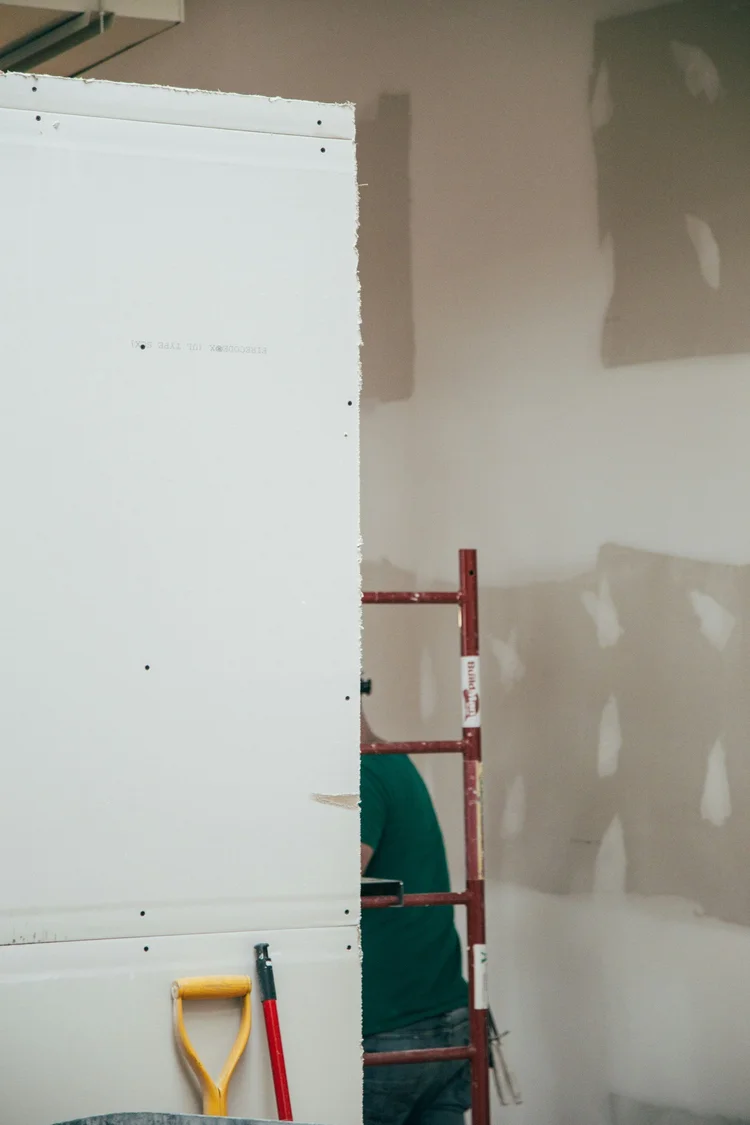
Most failed drywall repairs fail for the same reason: somebody filled a ragged hole with compound instead of cutting it back to solid board first. It looks fine for a month, then it cracks along the edge of the filler and you are back where you started.
Anything bigger than a fist gets wood behind it and a fitted piece of board. Then it is taped, mudded in thin coats, and each coat feathered wider than the last so the repair disappears into the wall instead of sitting proud of it.
That is the whole trick, and the reason it sometimes takes two visits. Joint compound has to dry properly between coats. Rushing that is how you get a patch that shows up again in a year.
Five steps, every time
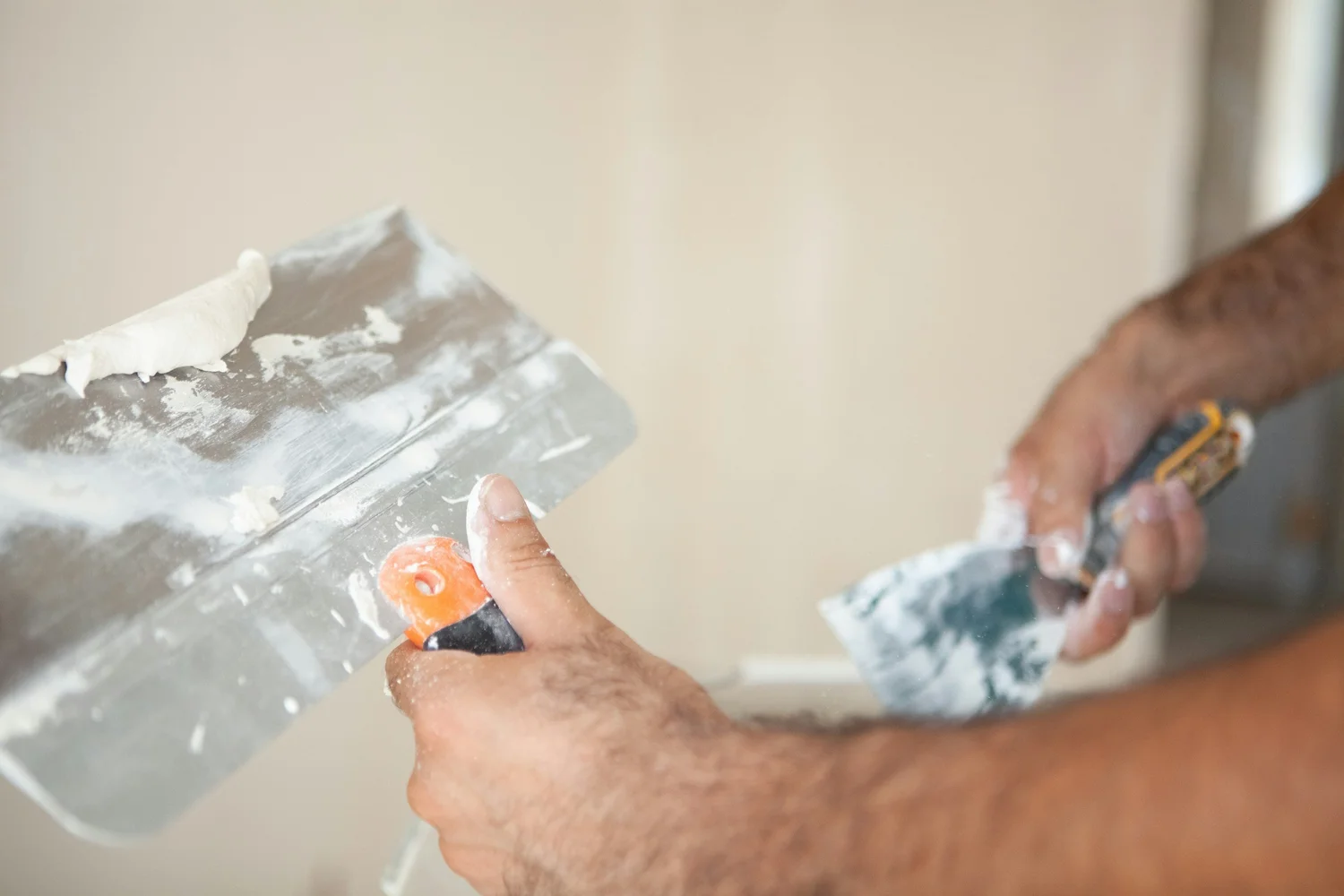
The difference between a patch you cannot find and one you notice every day is mostly patience.
- Cut it backSquare up the damage to clean, solid board. Filling a ragged hole is why patches fail.
- Back and patchAnything bigger than a fist gets wood behind it and a fitted piece of board, not just compound.
- Tape and mud in coatsThree thin coats, each feathered wider than the last, drying properly between.
- Sand and match textureOrange peel, knockdown or smooth, matched to the wall it is going into.
- Prime and clean upPrimed ready for paint, dust masked and cleaned up before I go.
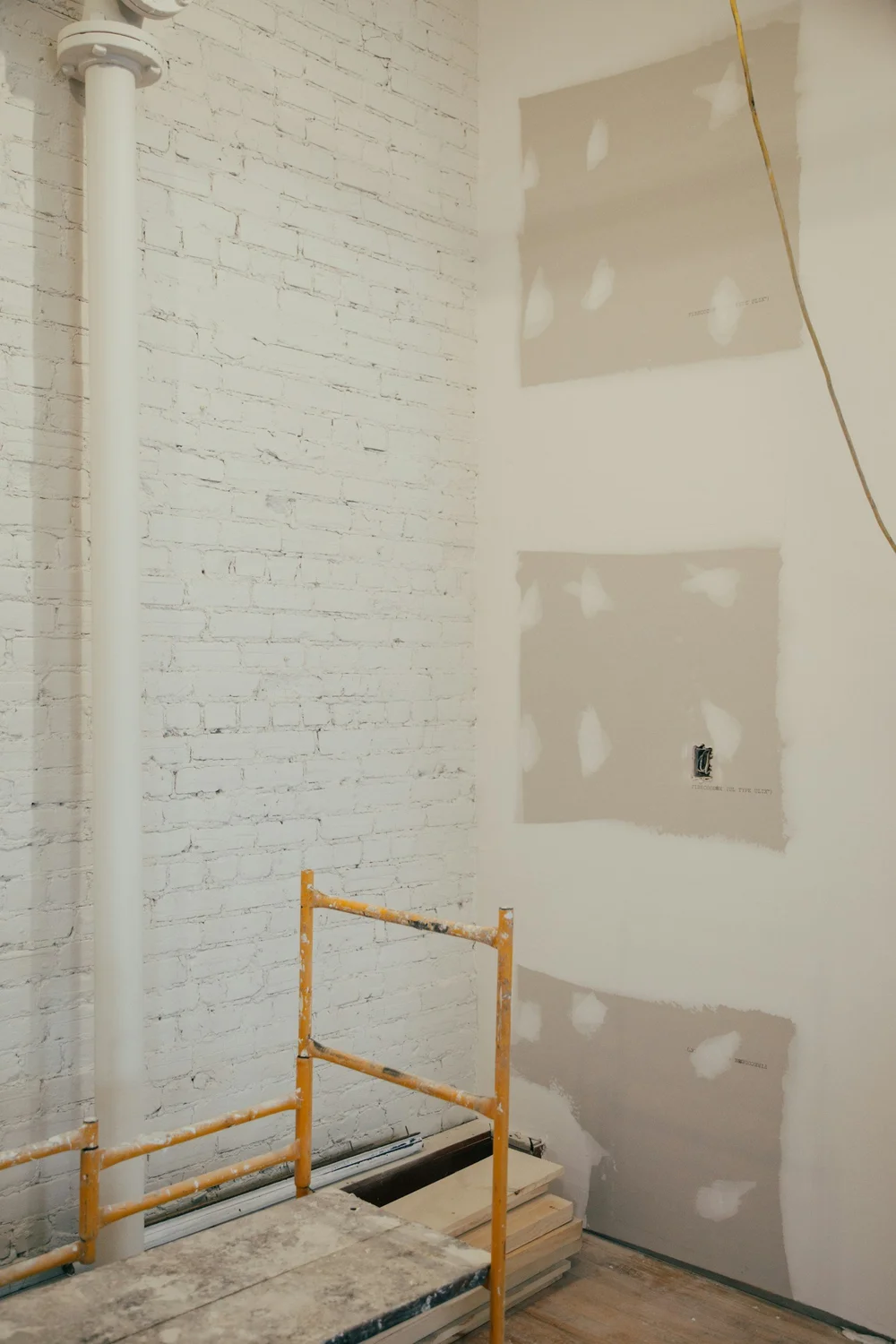
Matching the texture
A patch is only invisible if the surface around it matches. This is the step most people underestimate, and the reason a DIY repair usually still shows once the light hits it.
Orange peel and knockdown
Almost every newer home around here is one of the two, and both can be matched well with practice and the right consistency of compound.
- Orange peel: fine, even stipple
- Knockdown: sprayed, then flattened
- Usually needs a second visit for drying time
Smooth walls
People assume smooth is the easy case. It is the opposite. With no texture to break up the light, every ripple shows, especially with side light from a window.
- Wider feathering, more coats
- Judged with a light held along the wall
- Sometimes painting the full wall is the only fix
Ceiling stains after a hard winter
If a brown ring appears on an upstairs ceiling in February or March, the cause is usually not a burst pipe. It is an ice dam.
Gutters that were full going into winter freeze solid. Meltwater backs up, gets under the shingles, and finds its way into the ceiling. By the time you see the stain the water has often stopped, which is why patching it without finding the source is a mistake.
I will work out whether it is still active before touching the drywall. And if the cause was the gutters, that is worth sorting before next winter rather than repairing the same ceiling twice.
Before I patch water damage
In this order, every time.
- Is it still wet? A moisture check beats a guess
- Where did it come from? Roof, gutter, plumbing or condensation
- Is the source dealt with, or is it going to happen again in March?
- Is the board sound enough to dry out, or does it need cutting out and replacing?
- Only then does it get patched, sealed and textured
Should you just patch it yourself?
Plenty of drywall repair is genuinely DIY-able, and I would rather say so than pretend otherwise.
Worth doing yourself
Go ahead if this is you
- ✓Nail holes and small anchor holes, filled and sanded
- ✓You have a wall you are repainting anyway, so a slightly visible patch does not matter
- ✓A spare patch of matching paint and the patience to do two coats
- ✓The damage is smaller than a fist and not on a ceiling
Worth calling me
Where it usually goes wrong
- ✓Anything that needs a backed and fitted patch rather than filler
- ✓Ceilings, where the light shows every ripple
- ✓Texture matching, which is the step most DIY repairs fail on
- ✓Water damage, where the real job is finding the cause first
Real reviews, real houses
Pulled from Google, from customers around Cache Valley.
I needed a some shelving put into my house and Brendan was so kind, and made sure it was just how I wanted it. I'm so grateful to have found a company that is reliable and trustworthy, he was so professional and did such a nice job, left everything spotless and ready for me to decorate! I will absolutely give him a call next time I need some help.
I reached out about some basic repairs and Brendan got back to me quickly and came the same day and sent me updates throughout the day as was out of town! He was knowledgeable and helpful! I would definitely call again if I needed anything else.
I normally don't leave reviews, but want to mention the positive experience I had with Titan Home Services. Finding a punctual, reliable, and professional handyman service can be very challenging. Luckily I found that with Brendan and will definitely be using him for future projects.
Drywall repair FAQs
How much does drywall repair cost?+
It comes down to how many spots, how big they are, and whether the texture needs matching. A few anchor holes is a quick job. A ceiling hole with texture to match takes longer because it has to dry between coats. I look at it, give you a flat number before I start, and the estimate is free.
How do you repair a hole in a ceiling?+
Same method as a wall, just harder to make invisible because ceilings catch the light. I cut the damage back to a clean square, back it with wood, fit a patch, tape and mud it in coats, then match the texture. Ceilings are where a rushed patch shows most, so it is worth doing properly.
Can you fix anchor holes and nail holes?+
Yes, and it is one of the most common calls I get, usually when somebody is moving out or taking a TV down. Small holes are quick. If there are a lot of them I will do the whole wall at once rather than charging you spot by spot.
What about water damage?+
First thing is finding out whether it is still wet and where the water came from. There is no point patching a ceiling if the source is still there. Once it is dry and the cause is dealt with, I cut out the damaged board, replace it and blend it back in.
Can you match my texture?+
Usually yes. Most homes around here are orange peel or knockdown, and both can be matched with practice. Smooth walls are the hardest to hide a patch in, not the easiest, because there is no texture to break up the light. I will tell you honestly how close I expect to get before I start.
Do you paint after the repair?+
I can. A patch needs primer and paint to actually disappear, so if you have got the paint I will finish it. Bear in mind that paint fades on the wall over the years, so a patch painted with the original colour can still show slightly. Painting the full wall corner to corner is the way to make it vanish.
How long does it take?+
Small holes are usually one visit. Anything bigger normally needs two, because joint compound has to dry between coats and rushing it is how you get a patch that cracks later. I would rather come back the next day than hand you a repair that fails.
Do you clean up the dust?+
Yes. Sanding drywall makes a fine dust that travels, so I mask off the area and clean up properly before I leave. You should not be finding it on your furniture a week later.
Are you licensed and insured?+
Yes. Utah B100 General Contractor license, number 142481980, and I carry insurance.
Got a hole to deal with?
Text me a photo and I can usually give you a number without coming out. Free estimate either way, and I do the work myself.